
The Technology
An overview of the engineering principles that guide the development of the RA Energy photovoltaic platform.

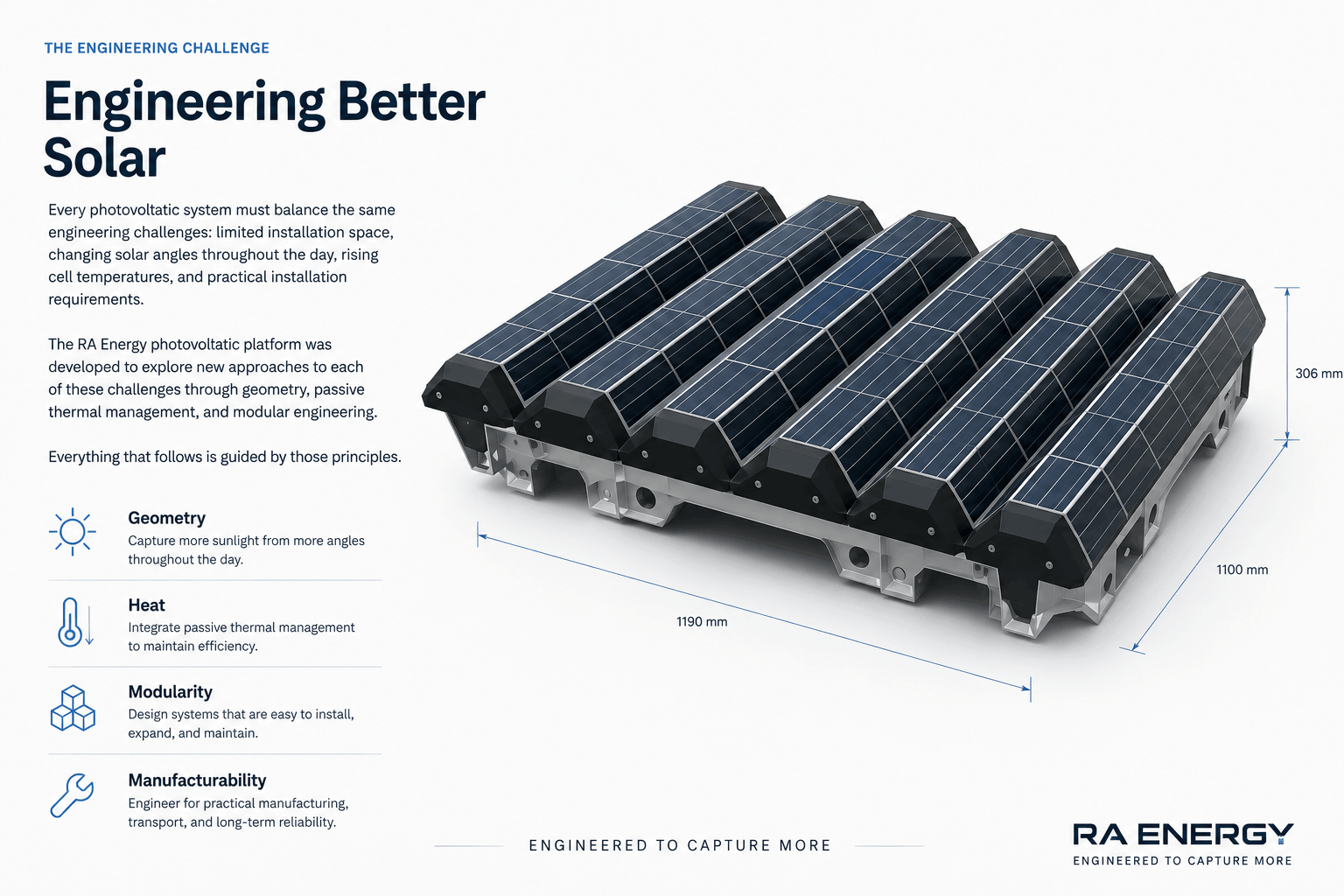
Four Engineering Principles
The current RA Energy photovoltaic platform is guided by four core engineering principles. Every design decision is evaluated through these objectives.
- Capture More Sunlight
- Manage Heat
- Simplify Installation
- Support Future Expansion
The Engineering Challenge
Every photovoltaic system must address the same engineering challenges: limited installation space, changing solar angles throughout the day, rising cell temperatures, and practical installation requirements.
The RA Energy photovoltaic platform was developed to explore new approaches to each of these challenges through geometry, passive thermal management, and modular engineering.
Everything that follows is guided by those principles.
Figure 1. Engineering objectives that guided the development of the current prototype.

Multi-Angle Solar Collection
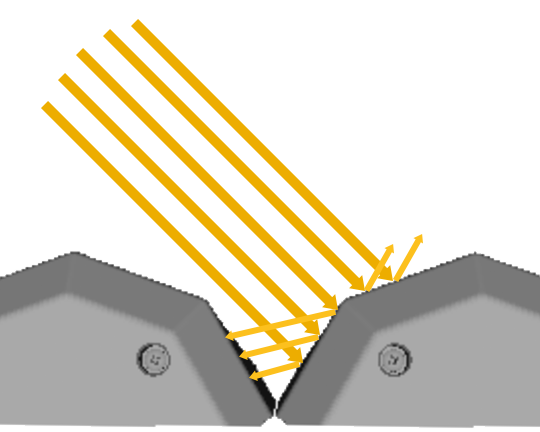
Traditional photovoltaic modules place every solar cell on a single plane, optimizing the panel for one primary orientation. The RA Energy prototype explores a multi-angle architecture designed to expose photovoltaic cells to useful sunlight across a broader range of solar angles throughout the day.
The objective is to harvest more usable energy from the available installation footprint while making better use of changing solar angles throughout the day.
Figure 2. Conceptual illustration of multi-angle solar collection.
Passive Thermal Management
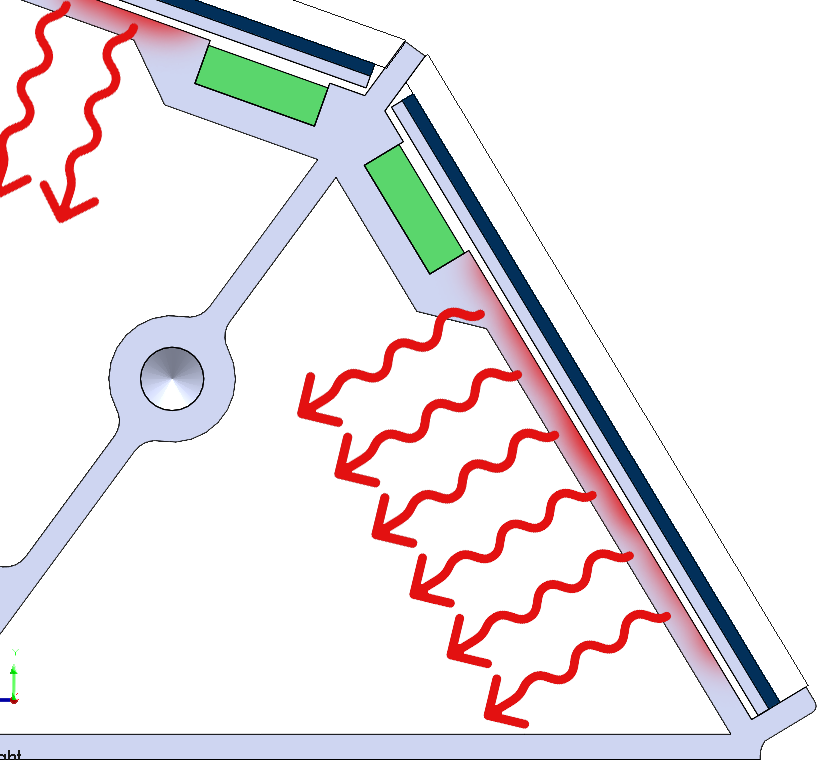
Photovoltaic cells become less efficient as operating temperatures increase.
The prototype integrates aluminum into the structural assembly to provide structural support while helping conduct thermal energy away from the photovoltaic cells through passive conduction.
Thermal management has been considered as part of the overall architecture rather than as an independent component.
Figure 3. Passive thermal management through aluminum structural integration.
Modular by Design
Every installation presents different requirements.
The RA Energy platform was designed with modularity in mind, allowing systems to be expanded over time while simplifying transportation, installation, and future maintenance.
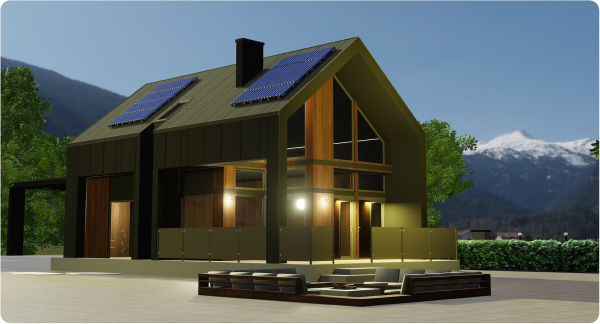
This flexible architecture supports a wide variety of applications, from residential rooftops to marine and mobile environments, while also creating opportunities for future system expansion without requiring an entirely new installation.
Figure 4. Prototype Version 1 assembled using machined aluminum, 3D-printed components, and commercially available photovoltaic cells.
Continuing Development
The current prototype serves as a foundation for continued research and development.
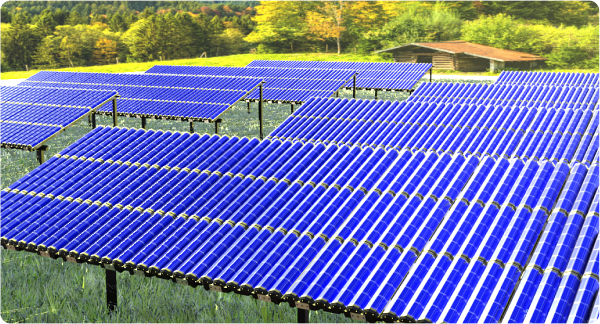
Future work will focus on expanding testing, refining the photovoltaic architecture, improving manufacturing methods, and exploring custom photovoltaic cell designs optimized specifically for this platform.
Engineering is an ongoing process, and each iteration builds on the lessons learned from the last.
Figure 5. Solar Farm Concept
From Concept to Prototype
Engineering ideas gain value through testing. Every iteration provides new data, new observations, and new opportunities for refinement.
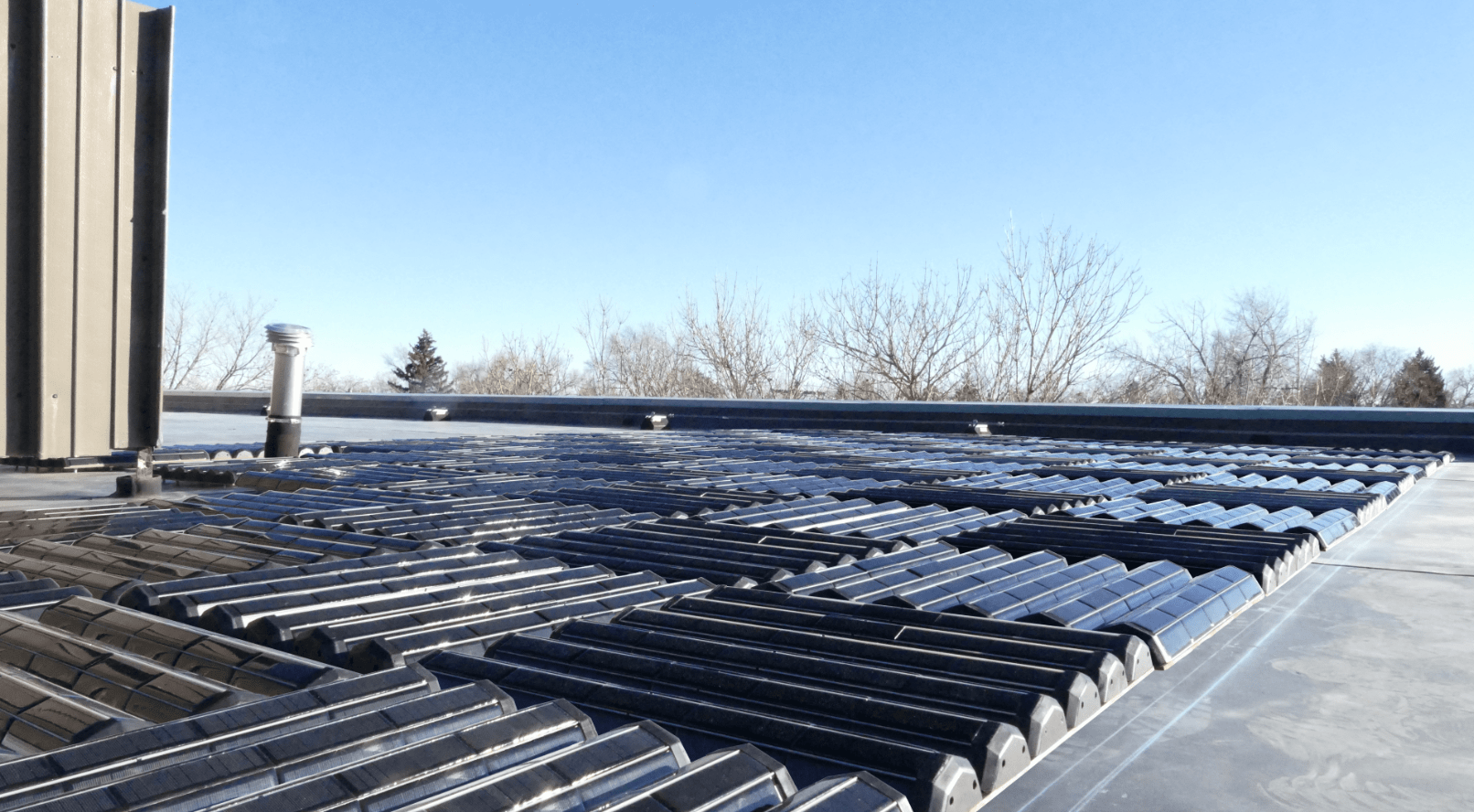
The current prototype represents years of design, CAD development, fabrication, machining, assembly, and continuous refinement. Each stage has provided valuable insight into both the opportunities and the engineering challenges of this photovoltaic architecture, helping guide every iteration that follows.
Figure 6. Test Solar panel installation
Explore the Prototype
Engineering is best understood by seeing the process.
Explore the engineering journey behind the RA Energy prototype, from the earliest concept sketches and CAD models to fabrication, testing, and ongoing development.